
Yes. The U.S. Coast Guard has specialized forces that carry out high-risk maritime law enforcement, counterterrorism, security, defense and emergency response missions. The official umbrella term is Deployable Specialized Forces (DSF). Its Maritime Security Response Teams (MSRTs) are the closest match if you are asking about a Coast Guard counterpart to the Navy SEALs.
That does not make MSRT a SEAL team, however. The Coast Guard’s DSF organization is distinct from the military special operations forces assigned to U.S. Special Operations Command (USSOCOM).
And some DSF units specialize in diving or hazardous-material response rather than tactical law enforcement.
I find it more useful to compare these units by the problems they solve than by which one is considered the most elite. Here is how the Coast Guard’s specialized forces fit together, including the service’s announced Special Missions Command and the career paths that can lead to specialized assignments.
What are Coast Guard Deployable Specialized Forces?
DSF stands for Deployable Specialized Forces. These are Coast Guard organizations with dedicated personnel, training and equipment for missions that require specialized expertise or additional capabilities.
They can reinforce other Coast Guard units and work alongside military services, federal agencies and international partners.
The maritime security portion of this capability has a statutory foundation in 46 U.S.C. § 70106, which directs the establishment of specialized maritime security forces, including enhanced teams capable of responding to serious security threats.
Regular Coast Guard cutters and boat stations already perform law enforcement, security and rescue missions. DSF units add capabilities for particularly demanding assignments, such as responding to maritime terrorism, reinforcing port security, supporting counter-trafficking operations or managing a major pollution incident.
The Coast Guard’s DSF safety program describes a broad community of specialties. DSF is not one occupation, a single tactical team or a designation that makes everyone assigned to it a special operations operator.
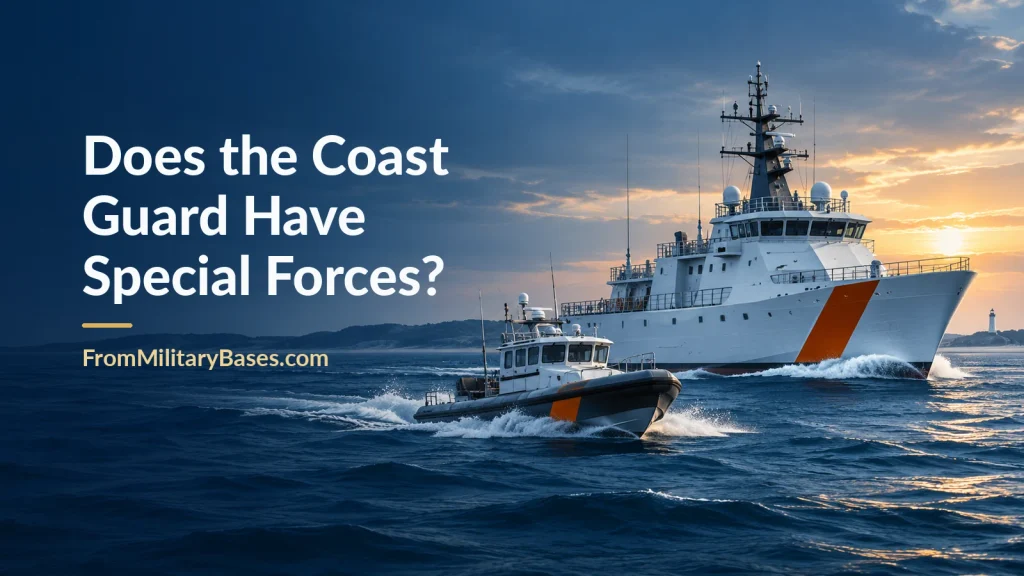
Coast Guard specialized forces and what each unit does
The Coast Guard identified six specialized-force categories in its May 2026 Special Missions Command announcement. The table also includes Law Enforcement Detachments because they are often discussed separately, even though they belong to Tactical Law Enforcement Teams.
| Unit or capability | Principal mission | Organizational relationship |
|---|---|---|
| Maritime Security Response Team (MSRT) | Maritime counterterrorism and high-risk law enforcement | DSF team |
| Maritime Safety and Security Team (MSST) | Port, coastal and waterway security | DSF team |
| Tactical Law Enforcement Team (TACLET) | Counter-trafficking and maritime law enforcement | DSF parent unit for LEDETs |
| Law Enforcement Detachment (LEDET) | Ship-based maritime law enforcement | Detachment within a TACLET |
| Port Security Unit (PSU) | Expeditionary protection of ports and military assets | Predominantly Reserve DSF unit |
| National Strike Force (NSF) | Pollution, hazardous materials and incident response | Specialized response organization with component teams |
| Regional Dive Locker (RDL) | Underwater inspection, recovery, maintenance and security support | Specialized diving organization |
These are categories, not a count of individual units. For example, the NSF contains several teams, and multiple LEDETs may belong to a TACLET.
Maritime Security Response Teams (MSRT)
MSRTs provide the Coast Guard’s specialized response to maritime terrorism and particularly dangerous law enforcement situations. They can support security operations domestically or abroad, independently or with other agencies and military units.
If you have seen references to a Coast Guard tactical team capable of dealing with serious threats aboard ships, MSRT is probably the organization you are looking for. Its defining role is advanced maritime threat response, not routine port patrol or conventional naval combat.
The Coast Guard’s May 2026 announcement identifies MSRT as its first-response capability for maritime terrorist incidents and other serious threats. This is a better basis for understanding the unit than calling it the Coast Guard’s SEAL Team Six.
Maritime Safety and Security Teams (MSST)
MSSTs provide deployable maritime security, protecting waterways, ports, vessels and the public. Their work can support major public events, maritime infrastructure protection and national security operations.
What is the difference between MSRT and MSST? MSRT concentrates on responding to high-risk threats, including maritime terrorism. MSST concentrates on maritime protection and security. Both have law enforcement responsibilities, and their capabilities can overlap, but the teams are not interchangeable.
Tactical Law Enforcement Teams (TACLET) and Law Enforcement Detachments (LEDET)
A TACLET is an organization that prepares and supports deployable maritime law enforcement teams. A LEDET is one of those teams. The distinction matters because LEDET is not another peer category alongside TACLET in the DSF structure.
LEDETs can operate aboard Coast Guard cutters, Navy ships and authorized foreign partner vessels. They contribute Coast Guard law enforcement capabilities to operations that might otherwise rely on naval assets alone.
Counter-drug operations are a prominent example. A July 2024 Coast Guard release on Caribbean interdictions documents the involvement of Pacific TACLET detachments alongside U.S. and Dutch naval vessels and other agencies. Suspected offenders were referred for federal prosecution.
The Coast Guard Historian’s account of LEDETs traces the program to 1982 and explains how TACLETs later became their supporting organizations.
Port Security Units (PSU)
PSUs protect ports, shipping and other designated assets in expeditionary environments. They can provide security ashore and on the water, supporting U.S. and allied forces overseas and responding to domestic emergencies when needed.
They are particularly important for prospective reservists: the official PSU recruiting page describes units staffed almost entirely by Reserve members. Their jobs include security, boat operations, mechanical maintenance, communications and logistical support.
Although MSSTs and PSUs both protect maritime assets, PSUs are designed particularly for expeditionary port protection and defense support, while MSSTs focus on deployable port and waterway security.
National Strike Force (NSF)
Despite its name, the National Strike Force is not primarily an armed assault force. It provides technical specialists and equipment for major emergencies, including oil spills, hazardous chemical releases and other complex incidents.
Its organization includes the Atlantic, Gulf and Pacific Strike Teams, the National Strike Force Coordination Center, and incident management and public information assistance teams, as described in a July 2026 Coast Guard release.
The force can support Coast Guard and other federal incident response authorities. This is one of the clearest examples of why DSF should not be treated as a synonym for combat special operations.
Regional Dive Lockers (RDL)
Regional Dive Lockers provide professional military diving expertise. Their work includes underwater inspection, repair and recovery, support for navigation infrastructure and maritime security, and diving in demanding environments such as polar waters.
The Coast Guard’s Diver (DV) career profile explains the occupation. Military diving in support of maintenance or recovery does not make a Coast Guard diver a Navy SEAL or a rescue swimmer.
Other specialized Coast Guard capabilities
The DSF safety program also covers Coast Guard Naval Coastal Warfare billets supporting Navy expeditionary missions. Those billets should not be counted as a seventh independent unit category in the Special Missions Command announcement.
The Helicopter Interdiction Tactical Squadron (HITRON) provides aviation support for maritime drug interdiction; it appears alongside TACLET detachments in the Coast Guard’s Caribbean interdiction release. It was not separately named among the six categories in the May command announcement.
Similarly, Coast Guard rescue swimmers have specialized aviation qualifications centered on saving lives, not DSF tactical law enforcement. Being highly specialized does not automatically place an occupation within DSF.
What is the Coast Guard Special Missions Command?
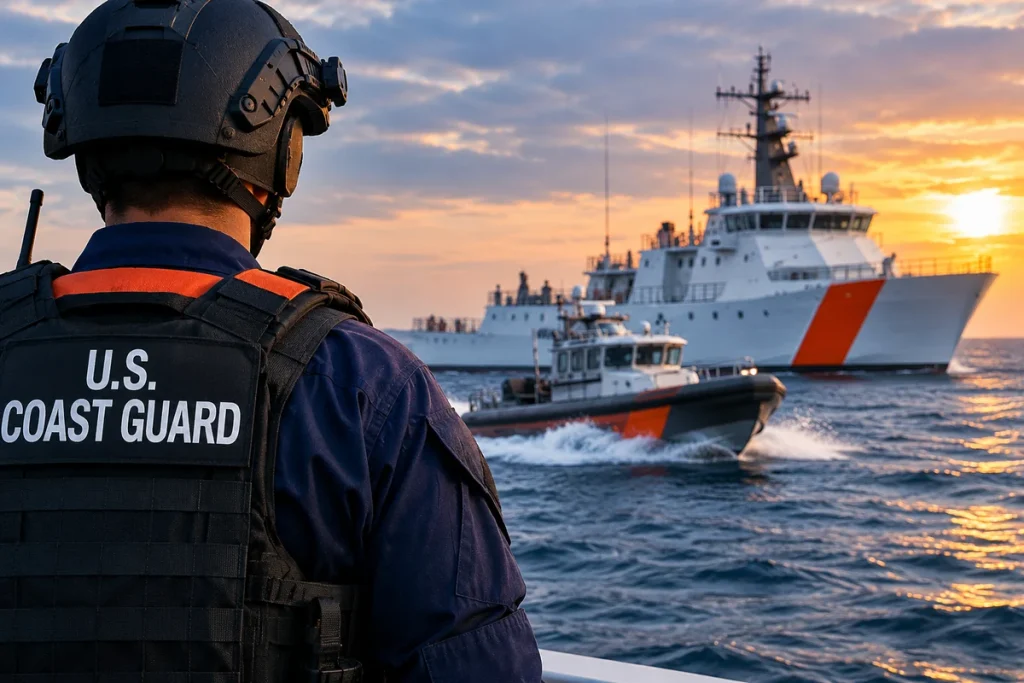
On February 10, 2026, the Commandant issued ALCOAST 051/26, directing the creation of Coast Guard Special Missions Command (CG SMC) as part of Force Design 2028.
The subsequent May 6 public announcement selected Kearneysville, West Virginia, as the headquarters location and named MSRTs, TACLETs, MSSTs, PSUs, RDLs and the NSF as intended components. The command is designed to consolidate responsibility for specialized forces, improve readiness and strengthen coordination with other agencies and military services.
The February directive specifies that the new command will report to the Commandant through the Deputy Commandant for Operations. The May announcement described the existing arrangement as shared control by the Atlantic and Pacific Area commanders.
Implementation status: The Coast Guard announced commissioning on or around October 1, 2026. As of November 13, 2026, I could verify the establishment directive and announced structure, but not a subsequent official confirmation that commissioning or the full transfer of units had occurred.
A July 28, 2026 Coast Guard report still identified the command’s leader as the director of the pre-commissioning team. The planned date alone does not establish the current reporting chain.
If you encounter older references to the Deployable Operations Group (DOG), that was an earlier Coast Guard arrangement. According to the National Coast Guard Museum’s historical account, DOG was established in 2007 and Area commands resumed control of specialized forces in 2013.
Special Missions Command is a Coast Guard command, not another name for USSOCOM. Creating it does not by itself formally designate Coast Guard DSF as military special operations forces under Title 10.
MSRT is a useful comparison with the Navy SEALs when discussing highly trained personnel operating in maritime environments. But the comparison ends when you look at the organizations’ legal responsibilities, command structures and principal missions.
| Feature | Coast Guard MSRT | Navy SEALs |
|---|---|---|
| Service | U.S. Coast Guard | U.S. Navy |
| Organization | Deployable Specialized Forces | Naval Special Warfare |
| Mission emphasis | Maritime threat response, security and law enforcement | Military special operations across sea, air and land |
| Law enforcement | Operates under Coast Guard maritime enforcement authorities where applicable | Does not possess general Coast Guard law enforcement powers simply by being a SEAL |
| Career path | Coast Guard service and specialized assignment qualifications | Navy SEAL selection and qualification |
The Navy’s SEAL career description explains the Navy’s special warfare pathway. Naval Special Warfare Command belongs to the military special operations enterprise. Its role differs from the Coast Guard’s service-specific specialized forces.
There is also a terminology difference. In official U.S. Army usage, Special Forces means Green Berets. Special operations forces (SOF) is the broader military category. 10 U.S.C. § 167 establishes USSOCOM and sets out formal criteria for identifying SOF.
Coast Guard units can cooperate with special operations forces and other military organizations. That cooperation does not change a unit’s designation or make Coast Guard personnel Navy SEALs.
I would choose a career based on its mission and entry pathway, not on the assumption that MSRT is an alternative route to a SEAL qualification. For a broader branch comparison, see Coast Guard vs. Navy.
Is the Coast Guard a law enforcement agency?
Yes. The Coast Guard is both a military service and a federal maritime law enforcement organization. These responsibilities coexist rather than replacing one another.
14 U.S.C. § 101 establishes the Coast Guard’s continuing military status. Section 102 sets out duties that include federal law enforcement, marine safety, rescue, defense readiness and environmental protection. Section 522 authorizes maritime inquiries, inspections, searches, seizures and arrests within the law’s applicable jurisdiction and conditions.
In practical terms, Coast Guard personnel may enforce federal laws relating to drugs, fishing, migration and maritime security. The applicable jurisdiction, legal authority and individual qualifications still matter. The statute is not unlimited authority to police any vessel anywhere in the world.
Ordinary Coast Guard units also conduct law enforcement; MSRT and TACLET provide specialized capabilities rather than holding a monopoly on that mission.
The Coast Guard normally operates within the Department of Homeland Security and can support military defense missions. See why the Coast Guard is a military branch and the Coast Guard’s wider missions for the service-level explanation.
How to join Coast Guard specialized forces
You do not enlist in an independent branch called Coast Guard DSF. You join the Coast Guard, enter an appropriate military career and pursue an eligible specialized assignment. The requirements depend on the job and assignment you seek.
Enlisted careers
If your goal is tactical maritime law enforcement, start with the official enlisted career catalog, especially Maritime Enforcement Specialist (ME). MEs are law enforcement specialists.
Other ratings, including Boatswain’s Mate (BM) and Machinery Technician (MK), can contribute to specialized units through boat operations and technical support.
For environmental response, investigate Marine Science Technician (MST); for professional underwater work, investigate Diver (DV). Each is a distinct occupation, and each has its own training and assignment requirements.
Selection for certain tactical jobs is a separate process. The Coast Guard’s assignment-year 2025 tactical operator screening notice, issued in 2024, is a documented example of screening serving personnel for MSRT and TACLET assignments.
It identifies tactical operator qualification as an ME competency and describes a limited trial involving other ratings and junior officers. That notice is historical evidence of the process, not a current application window or a promise that its eligibility rules still apply.
Officer careers
The Coast Guard’s response officer career path includes DSF alongside maritime law enforcement, boat operations and emergency response. Eligible applicants may pursue commissioning through a general accession program such as Officer Candidate School, then seek assignments in the response specialty.
A commission does not automatically lead to MSRT or another specialized unit. An officer’s assignment depends on qualifications, available positions and the needs of the service.
Reserve careers
Port Security Units offer a particularly relevant path for people interested in specialized Coast Guard missions while serving in the Reserve. A PSU assignment can involve substantial training and activation for deployments. Do not assume the same duty schedule or access to tactical assignments applies to every Reserve position.
Questions to ask a Coast Guard recruiter
- Which ratings or officer programs currently lead to the type of specialized work I want?
- What entry, medical, security and qualification requirements apply to my situation?
- Which assignments require additional screening, and when can I apply?
- What training or assignment commitments, if any, will be recorded in writing?
- What alternative assignments could I receive if I am not selected or do not qualify?
Start with official Coast Guard recruiting for current eligibility and application information. The Coast Guard does not offer one universal public selection standard for all DSF roles.
For a broader look at occupational options, see Coast Guard jobs and ratings and Coast Guard ranks. Remember that ME and DV are ratings, while a rank describes a member’s position in the military hierarchy.
Which Coast Guard specialized force should you look at?
If you are interested in responding to serious maritime security threats, investigate MSRT. If your interest is counter-trafficking and law enforcement at sea, TACLET and its LEDETs are especially relevant.
For port protection, compare MSST with the expeditionary Reserve opportunities in PSUs. For disaster response or underwater technical work, look at the National Strike Force and Regional Dive Lockers.
The Coast Guard does have specialized forces. The important distinction is that DSF covers a range of specialized maritime missions, and each unit has its own purpose. It is not the Coast Guard’s version of a single Navy SEAL team.

Jeffrey Rogers has served in the United States Army for 18 years. Jeffrey served on overseas combat tours in Afghanistan and Iraq. Jeffrey Rogers was born in Norfolk, Virginia. He graduated in Information technology from George Mason University. Now, Jeffrey is the content head of Frommilitarybases.com.